Document

About The Department

The Department of Artificial Intelligence & Data Science at Jyothi Engineering College was established in 2020 and is affiliated with KTU University, marking it as one of the first departments to introduce this course. Here, we seamlessly integrate Computer Science fundamentals with the cutting-edge realms of AI and Data Science.

Our accomplished faculty, seasoned experts in both AI and Computer Science, ensure a well-rounded education, bringing a perfect blend of theoretical knowledge and practical industry insights to offer students a holistic understanding of technology in our dynamic department.

Immerse yourself in a dynamic learning environment at our department, where well-established labs, equipped with state-of-the-art technology, cater to both Computer Science and AI requirements. Benefit from air-conditioned classrooms fostering academic excellence, ensuring mastery of fundamentals while staying at the forefront of technological advancements. Engage in groundbreaking research projects led by faculty members excelling in both AI and Computer Science, showcasing our commitment to innovation and offering diverse exploration, from classic algorithms to the latest advancements in artificial intelligence.

Join student associations and professional bodies providing a platform for collaboration, workshops, and networking opportunities. At Jyothi Engineering College, we believe in nurturing well-rounded professionals equipped with a robust foundation in Computer Science and the specialized skills needed in the AI landscape.

We are bridging the gap between academia and industry for providing our students with enhanced placement opportunities. Your journey in the Department of Artificial Intelligence & Data Science encompasses the best of both worlds – a solid foundation in Computer Science and the dynamic possibilities of AI. Embrace a future where innovation meets tradition, and success knows no boundaries.

Message From HoD

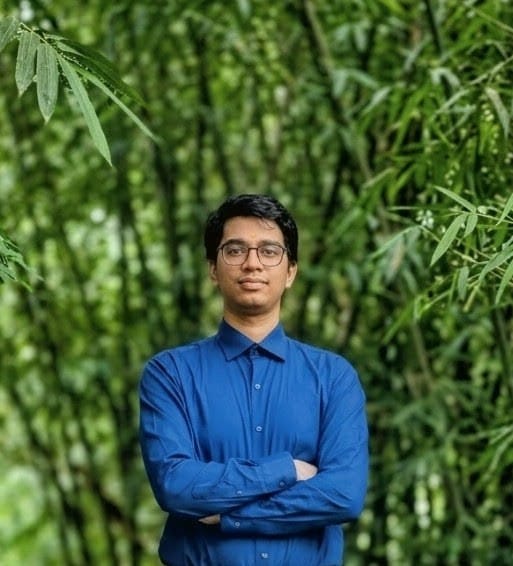
Mr. Shine P. Xavier

Welcome to the Department of Artificial Intelligence & Data Science at Jyothi Engineering College!As the Head of the department, it is my privilege to lead a team of dedicated faculty members who are not only experts in their respective fields but are also committed to providing an exceptional learning experience. Our goal is to prepare students for the rapidly evolving technological landscape by providing a strong foundation in Computer Science principles and immersing them in the exciting domains of Artificial Intelligence and Data Science.

We foster a culture of active student involvement by encouraging participation in research projects, engagement with student associations, and connections with professional bodies dedicated to AI and Computer Science. Additionally, our department organizes expert talks, workshops, hackathons, and other technical events, providing valuable experiences. Through our holistic education approach, these experiences empower our graduates to excel in both academia and industry, ensuring a well-rounded and successful journey beyond the classroom.

Best regards,
Mr. Shine P. Xavier
HoD
Department of Artificial Intelligence & Data Science
Jyothi Engineering College

Vision

Creating ethical leaders in the domain of Artificial intelligence and data Science through effectual teaching and learning process to develop emerging technology solutions for the benefits of industry and society with a focus on holistic learning and excellence.

Mission

⦁ Strengthening basic competencies in the domains of Artificial Intelligence and Data Science. ⦁ Providing high-quality, value-based technical education and developing technology professionals with creative ideas and compelling leadership abilities.

⦁ Using logical thinking to create and develop cutting-edge products in collaboration with industry stakeholders in order to meet global expectations and requirements. ⦁ Enabling graduates to adapt to new technologies via strong fundamentals and lifetime learning.


Course
Programme Educational Objectives

PEO 1: Graduates will demonstrate comprehensive expertise in artificial intelligence, machine learning, and data analysis while applying interdisciplinary knowledge in computer science, statistics, and advanced mathematics to address real-world challenges.

PEO 2: Graduates will innovate and create impactful solutions ethically, contributing to societal betterment, leveraging their leadership, collaboration, and communication skills for effective teamwork and multidisciplinary endeavors.

PEO 3: Continuously fostering a culture of lifelong learning, graduates will adapt to evolving technological landscapes, demonstrating adaptability and a commitment to ongoing professional development in the dynamic field of AI and data science.

Course
Programme Specific Outcomes

PSO 1: Graduates will be able to apply core principles of science, engineering, and mathematics to develop AI-driven solutions for real-world challenges.

PSO 2: Graduates will design, develop and implement efficient as well as scalable algorithms using programming languages, data structures and cloud computing technologies.

PSO 3: Graduates will integrate ethical, social, and security considerations while developing AI-driven intelligent systems, ensuring responsible AI deployment.


Course
Programme Outcomes

PO1: Engineering Knowledge: Apply knowledge of mathematics, natural science, computing, engineering fundamentals and an engineering specialization as specified in WK1 to WK4 respectively to develop to the solution of complex engineering problems.

PO2: Problem Analysis: Identify, formulate, review research literature and analyze complex engineering problems reaching substantiated conclusions with consideration for sustainable development. (WK1 to WK4)

PO3: Design/Development of Solutions: Design creative solutions for complex engineering problems and design/develop systems/components/processes to meet identified needs with consideration for the public health and safety, whole-life cost, net zero carbon, culture, society and environment as required. (WK5)

PO4: Conduct Investigations of Complex Problems: Conduct investigations of complex engineering problems using research-based knowledge including design of experiments, modelling, analysis & interpretation of data to provide valid conclusions. (WK8)

PO5: Engineering Tool Usage: Create, select and apply appropriate techniques, resources and modern engineering & IT tools, including prediction and modelling recognizing their limitations to solve complex engineering problems. (WK2 and WK6)

PO6: The Engineer and The World: Analyze and evaluate societal and environmental aspects while solving complex engineering problems for its impact on sustainability with reference to economy, health, safety, legal framework, culture and environment. (WK1, WK5, and WK7)

PO7: Ethics: Apply ethical principles and commit to professional ethics, human values, diversity and inclusion; adhere to national & international laws. (WK9)

PO8: Individual and Collaborative Team work: Function effectively as an individual, and as a member or leader in diverse/multi-disciplinary teams.

PO9: Communication: Communicate effectively and inclusively within the engineering community and society at large, such as being able to comprehend and write effective reports and design documentation, make effective presentations considering cultural, language, and learning differences.

PO10: Project Management and Finance: Apply knowledge and understanding ofengineering management principles and economic decision-making and apply these to one’s own work, as a member and leader in a team, and to manage projects and in multidisciplinary environments.

PO11: Life-Long Learning: Recognize the need for, and have the preparation and ability for i) independent and life-long learning ii) adaptability to new and emerging technologies and iii) critical thinking in the broadest context of technological change. (WK8)

Alumni Speak