Explore the dynamic realm of Electrical and Electronics Engineering at Jyothi Engineering College. Established in 2002, our institution is dedicated to fostering excellence in education, cutting-edge research, and technological innovation. Our primary objective is to provide high-quality education, training, and research opportunities spanning undergraduate, postgraduate, and doctoral levels, covering diverse aspects of Electrical & Electronics Engineering.
A testament to our commitment to academic advancement, we introduced the postgraduate program in Power Electronics in 2012, aligning our curriculum with the dynamic needs of the industry.
In 2017, the Department proudly became an approved research center under the esteemed APJ Abdul Kalam Technological University (KTU), marking a significant milestone in our journey towards fostering cutting-edge research and contributing to the global knowledge landscape.
Our state-of-the-art teaching facilities and advanced laboratories are designed to provide an immersive and hands-on learning experience, cultivating the analytical and practical skills essential for success in industrial, organizational, and research environments.
Accredited by the National Board of Accreditation (NBA) since 2016, we uphold the highest standards in education, ensuring our graduates are well-prepared for diverse career paths in the ever-evolving field of electrical & electronics engineering. Electrical and Electronics engineering is a dynamic discipline encompassing the study of electricity, electronics, and electromagnetism, with vast applications in various industries.
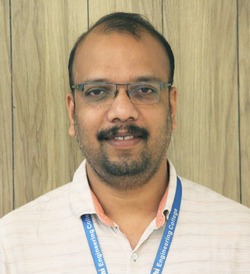
Welcome to the Department of Electrical and Electronics Engineering! It is my pleasure to share with you the dynamic and transformative journey that awaits you in the field of Electrical and Electronics Engineering. Our department is a hub of innovation, where academic excellence meets real-world applications. As the Head of the Department, I am committed to foster an environment that encourages curiosity, critical thinking, and a passion for exploration. Our dedicated faculty and state-of-the-art facilities are here to provide you with an enriching learning experience, equipping you with the skills and knowledge needed to thrive in the rapidly advancing world of technology...
Whether you are a student, a prospective collaborator, or simply someone intrigued by the possibilities of electrical and electronics engineering, I invite you to explore the diverse opportunities our department has to offer. Together, let's embark on a journey of discovery, innovation, and excellence...
Best regards,
Dr. SHIJOH V.
HoD
Department of Electrical & Electronics Engineering
Jyothi Engineering College
To become a centre of excellence in electrical and electronics engineering through high quality technical education with emphasis on holistic excellence
To inculcate ethical professionalism through value based quality education so as to equip the students with appropriate skills for a meaningful career and holistic excellence and promote creative engineering ideas for the benefit of the society
Graduates possess
Students in the programme at the time of their graduation are expected to possess the following capabilities
1. Engineering Knowledge: Apply knowledge of mathematics, natural science, computing, engineering fundamentals and an engineering specialization as specified in WK1 to WK4 respectively to develop to the solution of complex engineering problems.
2. Problem Analysis:Identify, formulate, research literature and analyze complex engineering problems reaching substantiated conclusions using first principles of mathematics, natural sciences and engineering sciences with holistic considerations for sustainable development
3. Design/Development of Solutions: Design creative solutions for complex engineering problems and design systems, components or processes to meet identified needs with appropriate consideration for public health and safety, whole-life cost, net zero carbon as well as resource, cultural, societal, and environmental considerations as required
4. Investigation:Conduct investigations of complex engineering problems using research methods including research based knowledge, design of experiments, analysis and interpretation of data, and synthesis of information to provide valid conclusions
5. Tool Usage: Create, select and apply, and recognize limitations of appropriate techniques, resources, and modern engineering and IT tools, including prediction and modelling, to complex engineering problems
6. The Engineer and the World:When solving complex engineering problems, analyze and evaluate sustainable development impacts* to: society, the economy, sustainability, health and safety, legal frameworks, and the environment
7. Ethics: Apply ethical principles and commit to professional ethics and norms of engineering practice and adhere to relevant national and international laws. Demonstrate an understanding of the need for diversity and inclusion
8. Individual and Collaborative Team work:Function effectively as an individual, and as a member or leader in diverse and inclusive teams and in multi-disciplinary, face-to-face, remote and distributed settings
9. Communication: Communicate effectively and inclusively on complex engineering activities with the engineering community and with society at large, such as being able to comprehend and write effective reports and design documentation, make effective presentations, taking into account cultural, language, and learning differences
10. Project Management and Finance:Apply knowledge and understanding of engineering management principles and economic decision-making and apply these to one’s own work, as a member and leader in a team, and to manage projects and in multidisciplinary environments
11. Life-Long Learning: Recognize the need for, and have the preparation and ability for (i.) independent and life-long learning (ii.) adaptability to new and emerging technologies and (iii.) critical thinking in the broadest context of technological change